
NEWS
Trump’s Tariff Authority Faces Supreme Court Test

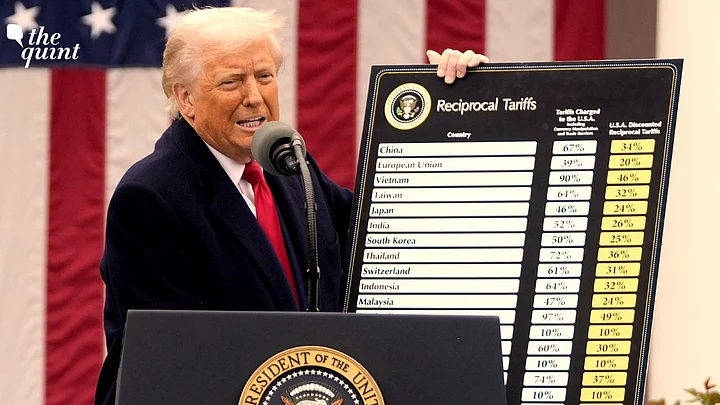
Washington, D.C. — The U.S. Supreme Court is poised to issue what could be one of the most consequential decisions of the year on presidential authority over trade, with a ruling expected imminently on former President Donald Trump’s use of emergency powers to impose sweeping tariffs on foreign imports. Legal experts, lawmakers, investors and multinational firms are watching closely, as the high court’s decision could reshape U.S. tariff policy, affect billions in federal revenue, and redefine the limits of executive power.
At the heart of the legal battle is whether Trump exceeded his authority under the International Emergency Economic Powers Act (IEEPA), a 1977 statute that allows the president to regulate international economic transactions during declared national emergencies. The tariffs, which cover goods from China, Mexico, Canada and many other nations, were justified by Trump’s administration as necessary responses to trade imbalances, national security concerns and drug trafficking. Opponents argue the law was never intended to grant unfettered tariff power — a constitutional authority they say belongs to Congress.
Legal Stakes and Immediate Effects
Lower federal courts have already weighed in: the U.S. Court of Appeals for the Federal Circuit found much of the tariff regime unlawful, concluding that IEEPA does not clearly authorize tariffs and that such sweeping economic actions require explicit congressional authorization. That ruling, which remained stayed pending appeal, set the stage for Supreme Court review.
Invalidation of Existing Tariffs: A ruling against the administration could strike down large portions of the tariff regime, potentially forcing the government to refund as much as $150 billion or more to importers who have paid disputed duties. Businesses including Costco, Revlon and Yokohama Tire have already filed suits seeking refunds.
Revenue and Fiscal Impact: Tariffs have been a significant source of federal revenue — nearly $195 billion in fiscal 2025 — and a reversal would deprive the Treasury of substantial income, with potential knock-on effects for borrowing costs and fiscal planning. Treasury officials have warned that loss of tariff authority would reduce the government’s leverage in trade negotiations and complicate budget projections.

THE QUIET NIGHT THAT TURNED INTO A DEFINING MOMENT FOR BARRON TRUMP — A FAMILY STORY THAT LEFT EVERYONE IN THE ROOM STUNNED

A QUIET FAMILY MOMENT UNFOLDS: MELANIA TRUMP’S HEARTFELT WORDS AS DONALD TRUMP STOOD SILENTLY BESIDE HER, WHILE THEIR FIVE CHILDREN WATCHED AND LISTENED FROM THE AUDIENCE

Trump says he must be involved in choosing Iran’s next leader

TRUMP RAISES THE POSSIBILITY OF BARRON AS A FUTURE PRESIDENT — AND A FATHER-SON MOMENT DRAWS NATIONAL ATTENTION

❤️ POLITICAL SHAKE -UP: NO POLITICS, NO SLOGANS — JUST A FATHER: THE MOMENT DONALD TRUMP STOOD SILENT AS HIS TWO SONS SPOKE .

SURPRISE A BIRTHDAY MOMENT THAT STOPPED THE ROOM: INSIDE BARRON TRUMP’S EMOTIONAL CELEBRATION WITH DONALD AND MELANIA

THE NIGHT THE TRUMP CHILDREN STEPPED FORWARD — AND DONALD TRUMP SAT BACK IN SILENCE FOR THE FIRST TIME IN DECADES

THE POLICAL SHAKE- UP THAT COULD AFFECT EVERYONE CALLS TO DEPORT MELANIA TRUMP SPARK NATIONAL DEBATE — DONALD TRUMP RESPONDS IN VIRGINIA APPEARANCE

WHAT YOU HAVEN’T HEARD ABOUT EIGHT WORDS THAT CHANGED EVERYTHING: HOW A QUIET DINER FROM DONALD TRUMP’S DARKEST BUSINESS YEARS NOW FEEDS 200 HOMELESS PEOPLE EVERY DAY

INSIDE THE OVAL OFFICE BARRON TRUMP SPOKE DONALD TRUMP WHISPERED TO HIM AND WHAT HAPPENED NEXT LEFT EVERYONE ASKING WHAT THAT SPEECH REALLY MEANT

WHAT YOU HAVEN’T HEARD ABOUT THE PRESIDENCY AND PASSING TORCH: TRUMP AND DON JR. SHARE THE STAGE AT THE STATE OF THE UNION
